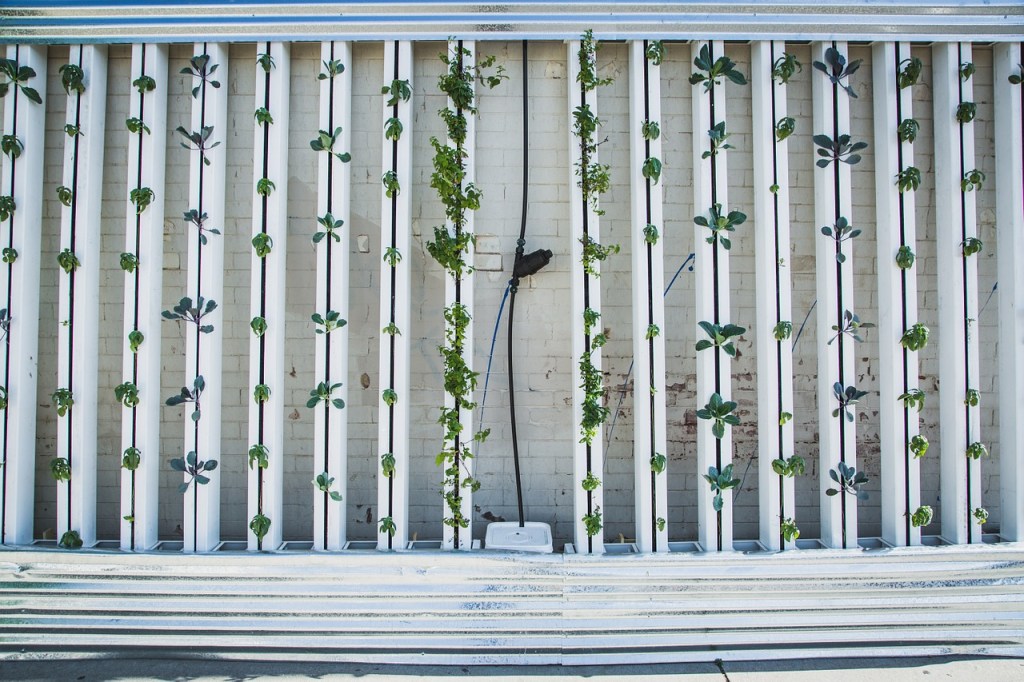
Need to grow food items without herbicides or pesticides in limited areas. This factor responsible for driving the growth of the vertical farming market. Nevertheless, production of biopharmaceutical products in buildings is expected to gain high momentum in the future and so will provide healthy opportunities to the players operating in the vertical farming market. over the next five years the Vertical Farming market will register a 41.0% CAGR in terms of revenue, the global market size will reach US$ 11420 million by 2024, from US$ 2888.1 million in 2019.
Vertical farming is a nontraditional method to grow crops, which enables ease of harvesting, no effect of climate, high yield, minimal usage of pesticides, less area requirement, and less water consumption. For instance, one hectare of vertical farming is equivalent to nine hectares of traditional outdoor farming, and saves nearly 200 tons of water on a daily basis.
Click Here to Get Free Sample Copy of this Research
Aeroponics, a growth mechanism of vertical farming uses mist, mixed with vital nutrients, water, and oxygen and directs it to the open roots of the plants for their growth. This growth mechanism is a closed-loop system that uses approximately 95% less water than field farming. This technique does not use pesticides in addition to zero harmful waste production in the environment. The controlled environment of aeroponics has the capability to produce approximately 70% more yield as compared to traditional agriculture.
The demand for vertical farming is expected to increase rapidly across the globe during the forecast period, owing to various factors such as rise in popularity of organic food, increase in urban population, and decrease on arable land. However, high initial investments and involvement of nascent technology hamper the market growth.
The global vertical farming market is segmented based on component, growth mechanism, and region. Based on component, the market is categorized into irrigation component, lighting, sensor, climate control, building material, and others. The building material segment is bifurcated into glass greenhouse and plastic greenhouse. Based on growth mechanism, the market is categorized into hydroponics, aeroponics, and aquaponics. Geographically, it is analyzed across North America (U.S., Mexico, and Canada), Europe (UK, Germany, France, Netherlands, and rest of Europe), Asia-Pacific (China, India, Japan, Australia, Singapore, and rest of Asia-Pacific), and LAMEA (Brazil, Saudi Arabia, South Africa, and Rest of LAMEA).
Click Here to Inquire More About This Report
The report also presents the market competition landscape and a corresponding detailed analysis of the major vendor/manufacturers in the market. The key manufacturers covered in this report: Breakdown data in in Chapter 3.
AeroFarms
TruLeaf
Gotham Greens
Lufa Farms
Beijing IEDA Protected Horticulture
Plenty (Bright Farms)
Mirai
Green Sense Farms
Sky Vegetables
Garden Fresh Farms
Metropolis Farms
Spread
Plantagon
Urban Crops
Scatil
GreenLand
Nongzhong Wulian
Jingpeng
Sky Greens
Sanan Sino Science
Alegria Fresh
Farmbox
Indoor Harvest
Green Spirit Farms
Sundrop Farms
Infinite Harvest
Greener Roots Farm
FarmedHere
Vertical Harvest
Metro Farms
 New Trends and Analysis